
The crow was trying to crack a nut in the car park behind the house. She picked it up in her beak, flew almost vertically, dropped it, came down, inspected it. Nothing, again. Four or five times. Same result. Then she left. A mathematician, perhaps, or an engineer. Maybe even a philosopher. She had a problem: height, gravity, hardness, surface. What works? What doesn’t? Try again. Change the conditions. If this car park is no good, find another one.
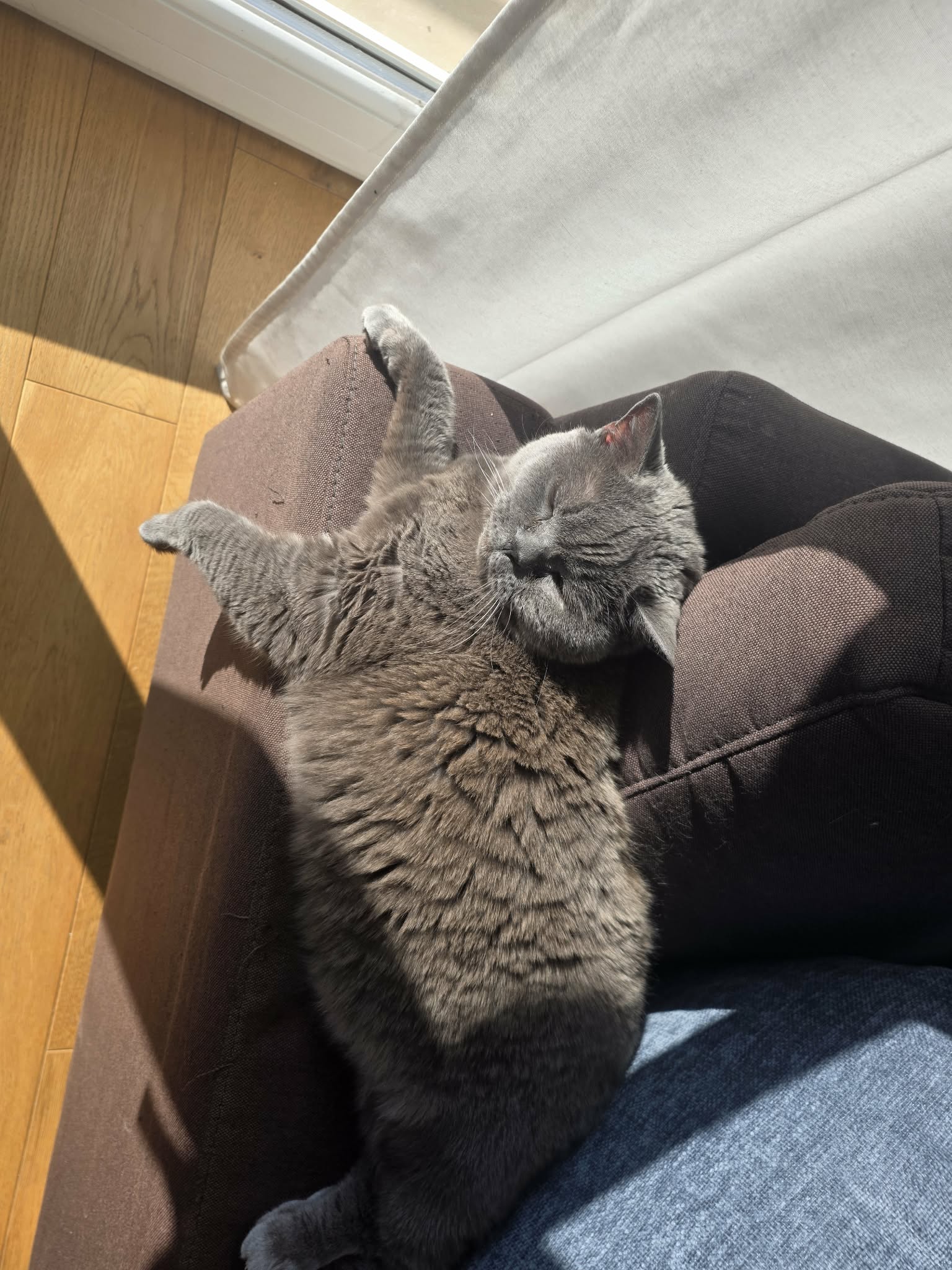
Vicky watched from the window. She wanted to be stroked. She asked for it, received it, then eventually wandered off. What happens in the interval is unknowable. Does she remember the last stroke? Anticipate the next one? Probably. Perhaps not. But she does not appear burdened by the gap.
The crow and the cat seem to inhabit experience without having to turn it into an account of experience. We are less fortunate. We write things down. We return to what happened. We arrange it, revise it, discover patterns, assign meaning. Writing can make experience available in a new way. It can preserve what would otherwise disappear. It can also change what has already happened by changing the place it occupies in memory.
But there is a paradox.
Perhaps one reason to write is eventually not to have to write.
Writing becomes useful when it helps experience move. Something confused becomes articulate. Something unbearable acquires proportion. Something repetitive becomes visible. The page performs some work and can then be left behind.
The trouble begins when writing becomes a substitute for that movement, when the same nut is dropped onto the same surface again and again. Another interpretation, another refinement of what the event “really” meant. Meaning is sought long after meaning has ceased to be the problem.
There is an important difference between an experience that has not yet been understood and one that has already been understood enough.
The second may need something other than interpretation. Time. Action. Sleep. Conversation. Touch. Distance. Forgetting.
Or simply another day.
This may be what metabolisation means. Not that every experience eventually finds its correct sentence, but that experience is absorbed into a life. Some of it can be written, some can’t. Some does not need to be.
Writing is one means by which this happens, but its success may finally be measured by its ability to become unnecessary.

Leave a Reply